

Marble floors are common in Indian homes, from the living room to the pooja room. They are also easy to damage. If your marble has lost its shine, has dull patches near the kitchen or looks cloudy after mopping, the cleaner is often the cause. The fix is simple: use a pH-neutral floor cleaner.
What does pH-neutral mean?
pH measures how acidic or alkaline a liquid is, on a scale from 0 to 14. Pure water sits in the middle at 7, which is neutral. Lemon juice and vinegar are acidic (low pH). Bleach and many heavy-duty degreasers are strongly alkaline (high pH). A pH-neutral cleaner sits close to 7, so it cleans without chemically attacking the surface underneath.
Why marble and natural stone need a pH-neutral cleaner
Marble is made of calcium carbonate. Acids react with it and dissolve a thin layer of the stone. That is what “etching” is: the dull, rough patches you see where lemon, vinegar, tomato or a bathroom acid cleaner touched the floor. Harsh alkaline cleaners and bleach can strip the polish and leave a hazy film. Granite is tougher, but its sealer and polish wear faster with harsh chemicals too.
- Marble and Italian marble: the most sensitive. Always use pH-neutral.
- Granite: harder, but pH-neutral protects the polish and sealer.
- Kota stone and other limestone: calcium-based like marble, so acids etch it.
- Mandir and pooja room marble: often cleaned daily and touched by oil, kumkum and haldi. A gentle cleaner is safer for frequent use.
How to clean marble floors with a pH-neutral cleaner
- Sweep or vacuum first. Grit acts like sandpaper under a mop.
- Dilute the cleaner in a bucket of water as directed on the label.
- Mop with a soft, well-wrung microfibre or cotton mop. Marble does not like puddles.
- For stubborn spots, apply a little diluted cleaner with a soft cloth and wipe in small circles.
- Change the water when it looks dirty, and dry the floor with a clean mop or cloth for a streak-free shine.
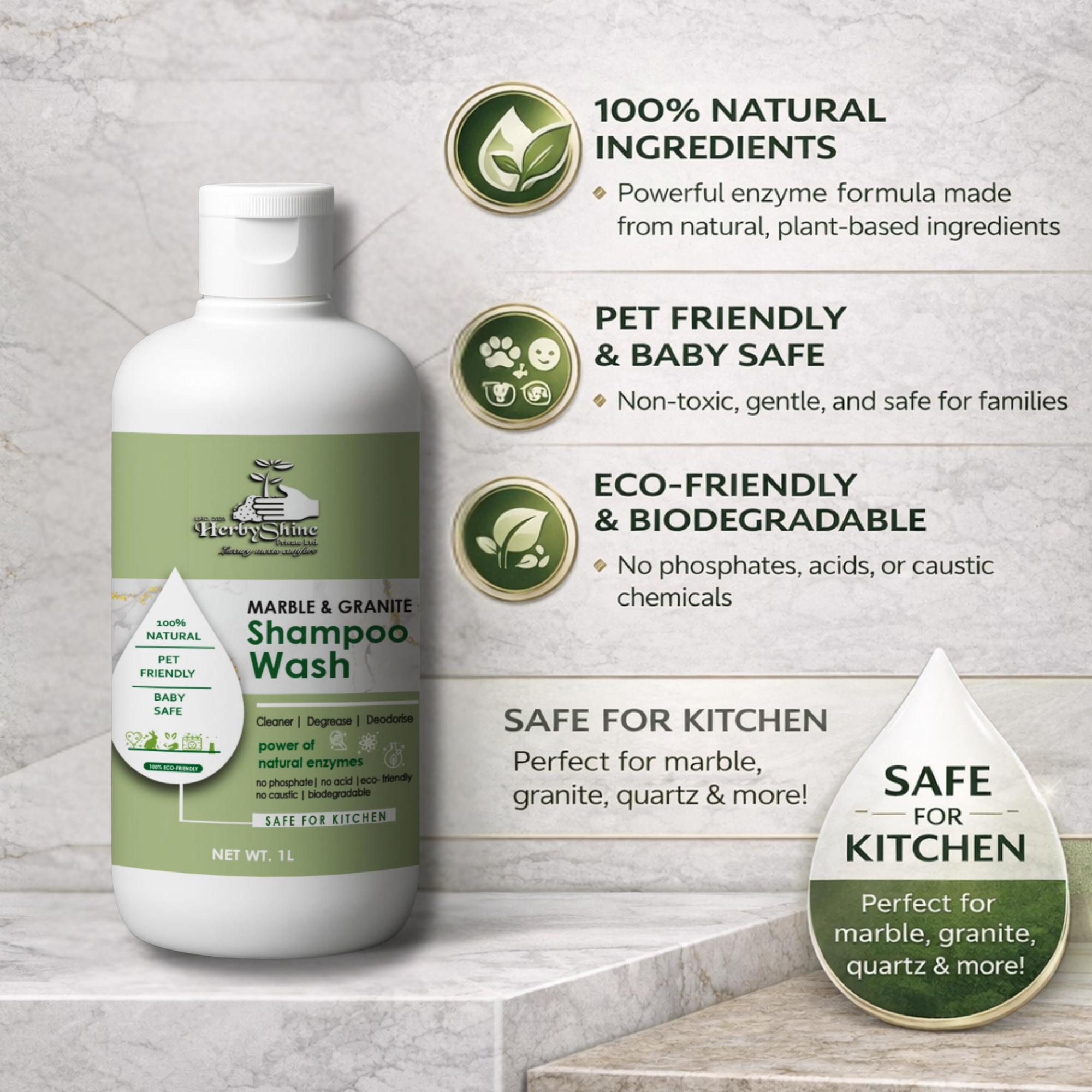
HerbyShine’s Premium Marble Cleaner is pH neutral and plant-based, made for marble, granite, natural stone and mandir floors. For larger homes there is a 5-litre marble and floor cleaner.
What to avoid on marble
- Vinegar, lemon and “home remedy” acid mixes.
- Bathroom acid cleaners and limescale removers.
- Bleach and phenyl-type disinfectants.
- Scouring powder, steel wool and hard brushes.
- Leaving spills such as juice, tea or oil to sit. Wipe them up quickly.
For a full routine, including how to treat stains, read how to clean marble floors without damaging their natural shine.
Frequently asked questions
A pH-neutral cleaner made for marble and natural stone. It removes dirt and grease without the acids or harsh alkalis that etch and dull marble.
No. Both are acidic and react with the calcium carbonate in marble, leaving dull, etched patches that need professional polishing to remove.
Yes. pH-neutral cleaners are gentle on granite, vitrified and ceramic tiles as well as marble, so one cleaner can be used across the house.
Wipe up oil, kumkum and haldi quickly, then clean with a soft cloth and a diluted pH-neutral marble cleaner. Avoid acidic cleaners and scrubbing pads.
Sweep daily and mop with a diluted pH-neutral cleaner every day or two in busy areas. Dry the floor after mopping to keep the shine.
Shop the products in this guide: Premium Marble Cleaner 1L · Marble & Floor Cleaner 5L · all marble cleaners