

To remove yellow stains from white marble, clean the area with a pH-neutral stone cleaner, then cover the stain with a thick poultice of baking soda and water, keep it covered for about 24 hours, let it dry, and rinse. Never use vinegar, lemon or acidic cleaners, because they etch marble and leave dull marks. Deep yellowing that keeps coming back usually starts inside the stone and needs a professional.
Why white marble turns yellow
Marble is porous, so liquids soak in and stay there. The fix depends on the cause, so find that first.
| Cause | How it looks | What to do | Avoid |
|---|---|---|---|
| Ghee, oil or diya drips | Darker yellow, slightly greasy patch | Baking soda and water poultice | Hot water and hard scrubbing |
| Haldi, kumkum or sandalwood | Bright yellow or orange mark | Blot, clean, then a poultice with 3% hydrogen peroxide | Rubbing it wet across the stone |
| Soap or cleaner residue | Dull yellowish film | Rinse with plain water, then mop with diluted pH-neutral cleaner | Using more cleaner than the label says |
| Old wax or polish | Even yellow layer, worse on walkways | Ask a stone polishing professional | Adding another coat of wax |
| Damp and iron from below | Yellow-brown patches near walls, taps or bathrooms that return | Fix the damp first, then ask a professional | Sealing over wet stone |
| Iron inside the stone | Spreading patches with no spill behind them | Keep the area dry and ask a professional | Bleach or acid removers |
How to remove yellow stains step by step
- Clean the area. Wipe it with a soft cloth and a pH-neutral cleaner diluted as the label says, such as HerbyShine Premium Marble Cleaner 1L, then let it dry.
- Patch test. Try the paste on a hidden corner first, especially on polished or very old marble.
- Mix the poultice. Stir baking soda with a little water until it is as thick as hung curd. For haldi or food marks on white marble only, use 3% hydrogen peroxide from a chemist in place of the water, and wear gloves.
- Apply it. Spread a layer about 5 mm thick, a little wider than the stain, using a plastic or wooden spatula.
- Cover it. Put cling film over the paste, tape the edges, and make a few small holes. Leave it for about 24 hours.
- Let it dry. Remove the film and allow the paste to dry fully. As it dries, it pulls the stain up out of the stone.
- Lift and rinse. Scrape the paste off gently with the spatula, rinse with clean water, and dry with a soft cloth.
- Repeat if it is working. Stubborn marks can take up to three rounds. If nothing changes after that, stop and ask a professional.
Yellow stains on a marble mandir or murti
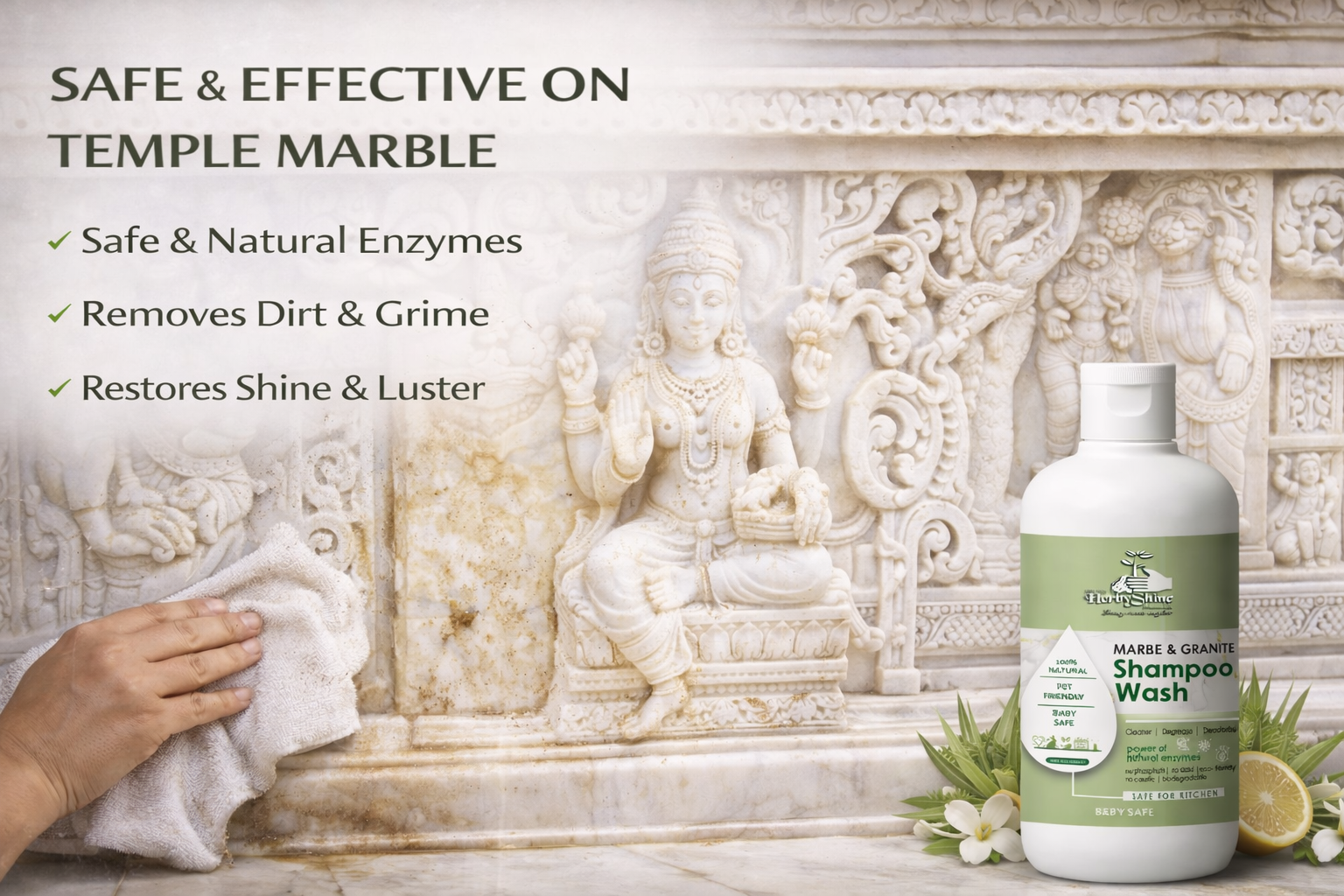
Move murtis and pooja items away first, and keep the poultice to the small area that is marked. Do not use hydrogen peroxide or a poultice near painted, gilded or gold-leaf detail, because it can lift the finish. For everyday care of the temple, follow our guide on how to clean a marble mandir at home.
Yellowing across a whole marble floor
When a full floor has turned yellow, it is rarely a stain you can treat with a paste. Old wax, worn polish and damp are more likely, and a stone polishing professional can tell you which one it is. Once the floor is restored, keep up a simple routine from our guide to cleaning marble floors without losing their shine.
For large floors, a bigger pack such as HerbyShine Marble & Floor Cleaner 5L is pH neutral and made for regular mopping. A routine cleaner keeps the floor clean, but it will not pull out a stain that is deep inside the stone. You can compare options in our marble floor cleaner range.
How to stop yellow stains coming back
- Wipe up oil, ghee, haldi and tea as soon as they spill.
- Keep diyas and brass items on a plate, not directly on the marble.
- Dry wet areas near taps, bathrooms and balconies, and repair leaks early.
- Dilute your cleaner as the label says and do not let residue build up.
- Ask a stone professional whether a sealer suits your marble.
- Keep all cleaning products out of reach of children, and never mix them with acids or bleach.
Frequently asked questions
The common causes are oil or ghee soaked into the stone, haldi and kumkum marks, old wax or polish ageing on the surface, soap and cleaner residue, and damp that carries iron up through the stone. White marble also contains small amounts of iron, which can turn yellow when it stays wet.
It can lighten organic stains such as haldi or food marks on white marble. Use 3% hydrogen peroxide mixed with baking soda as a poultice, patch test first, and keep it off coloured marble because it can lighten the stone.
A baking soda and water poultice is widely used on marble because it is not an acid. Do not scrub with the dry powder, since it can scratch a polished surface, and rinse off every trace after the poultice comes off.
No. Vinegar, lemon and acidic toilet or tile cleaners etch marble and leave dull patches that are harder to fix than the stain. Do not mix any cleaner with acids or bleach.
Leave it covered for about 24 hours, then uncover it and let it dry fully so it pulls the stain out of the stone. You can repeat it up to three times. If the mark has not changed by then, the cause is probably inside the stone.
Small spills usually can. Even yellowing across a whole floor is often old wax, worn polish or iron in the stone, and it needs a stone polishing professional to assess it. Fix any damp first or the yellowing can come back.