

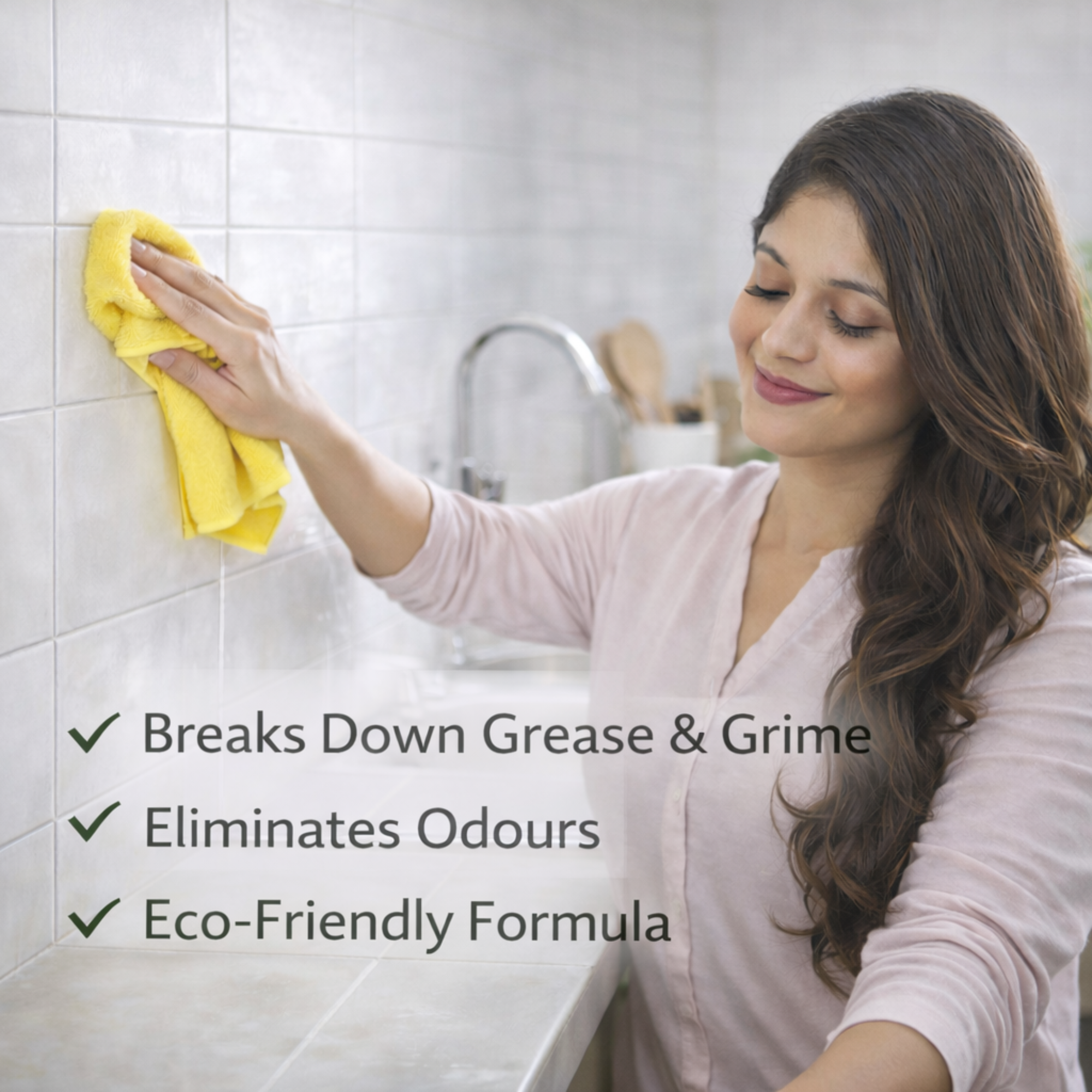
To clean greasy kitchen tiles, wipe off loose dirt, apply a tile cleaning liquid to the oily area, let it sit for a minute or two, scrub the grout lines with a soft brush, then rinse with clean water and dry the tiles. Clean the wall behind the stove every week, before the oil hardens into a sticky brown layer. Keep vinegar and lemon away from marble or granite counters, because acids etch natural stone.
Why kitchen tiles get greasy
Every tadka and every batch of pakoras sends fine drops of oil into the air. They settle on the wall tiles around the stove, on the floor in front of it and along the grout lines, and dust sticks to them. Left for a few weeks, the oil turns sticky and darker and is much harder to lift. A short weekly clean stops that.
What you need
- A tile cleaning liquid that cuts grease, such as HerbyShine Tile Cleaner
- A bucket of water and a mop for the floor
- A soft sponge or microfibre cloth for the walls
- An old soft toothbrush or grout brush for the joints
- A dry cotton cloth to finish
How to clean greasy kitchen wall tiles, step by step
- Switch off the stove and let the tiles cool. Wipe off loose crumbs and dust with a dry cloth.
- Shake the tile cleaner bottle, then apply it to the greasy area with a cloth or sponge. For thick, old grease, dilute it 1:1 with water, as the HerbyShine label directs for stubborn stains.
- Let it sit for 1–2 minutes so the grease loosens.
- Wipe in small sections with a damp sponge. Scrub the grout lines with a soft brush.
- Rinse with clean water and wipe the tiles dry. This stops the sticky film that leftover cleaner and oil can leave behind.
How to clean a greasy kitchen floor
Sweep first, so grit does not scratch the tiles. Mop with the tile cleaner diluted in a bucket of water, and give the area in front of the stove and sink a second pass. For dark marks in the grout, apply the cleaner straight onto the joint, wait a minute and brush it. Finish with a mop of plain water and let the floor dry before you walk on it.
Which method for which kitchen surface
| Surface | What to use | Avoid |
|---|---|---|
| Glazed ceramic or vitrified wall tiles | Tile cleaning liquid, soft sponge, rinse and dry | Steel wool and harsh scouring powder, which scratch the glaze |
| Grout lines | Tile cleaner applied to the joint, soft brush | Frequent acid cleaners, which can wear away cement grout over time |
| Kitchen floor tiles | Tile cleaner diluted in a bucket, then a plain-water mop | Leaving the floor wet and slippery |
| Marble or granite counters | A pH-neutral stone cleaner such as HerbyShine Premium Marble Cleaner | Vinegar, lemon and other acids, which etch the stone |
| Steel taps and the sink | A tap cleaner for white hard water marks | Abrasive pads that leave scratches |
How to keep kitchen tiles clean for longer
- Wipe the wall behind the stove after heavy frying, while the oil is still fresh.
- Do a full clean of the wall tiles once a week and the grout once a month.
- Run the chimney or exhaust fan while you cook, so less oil settles on the walls.
- Before Diwali and other festivals, do a deep clean of the wall, the floor and the grout together.
Safety: test any cleaner on a small hidden area first. Never mix cleaners, and never mix them with bleach or acids. Keep cleaning products out of reach of children. Open a window while you clean.
For bathrooms, read how to clean bathroom tiles and grout and how to remove hard water stains from taps and tiles. See all tile cleaners.
Kitchen tile cleaning FAQs
Apply a tile cleaning liquid that cuts grease, let it sit for 1–2 minutes, wipe with a damp sponge and scrub the grout with a soft brush. Rinse with clean water and dry the tiles, so no oily film is left.
Usually because loosened oil or leftover cleaner was not rinsed off. Wipe the tiles again with clean water and dry them with a cotton cloth.
Not as a habit. Acids can wear away cement grout over time, and they etch marble and granite counters. A tile cleaner that is free from acid is the safer choice.
Apply the tile cleaner straight onto the grout line, wait a minute and scrub with an old soft toothbrush or a grout brush. Rinse and dry.
Wipe the wall behind the stove after heavy frying, clean the wall tiles once a week and the grout once a month. Regular cleaning stops oil from hardening.
It is made with neem, lemongrass and plant-based surfactants, without bleach, ammonia or acid, and the product states it is safe for kids and pets. Still keep the bottle out of reach of children.